
The Kitchen Blind Spot: A Simple Guide to Non Toxic Cookware
- Sil Brangold

- May 12
- 4 min read
Updated: Jun 9

If you are intentional about what goes into your body, you need to consider what your food is cooked in. Most people don’t, and that's the reason eating is not as clean as they think. We use the same pots and pans every day, assume they’re harmless, and rarely question what happens when heat, oils, and materials interact. Big blind spot: the wrong cookware can leach metals, microplastics, and hormone‑disrupting chemicals into your meals, especially at high temperatures. And because the effects are slow and cumulative, they’re easy to overlook… until they’re not.
This is your moment to pause, take stock, and make sure your cookware isn’t quietly undermining the healthy meals you work so hard to prepare. A few smart upgrades can bring your kitchen back into alignment with your wellbeing goals.
A lot of cookware looks promising at first glance, yet most underdeliver —costing more in the long run. Here’s how to choose pieces that truly hold up.
The 3 Most Common — and Surprisingly Harmful — Cookware Materials to Avoid
1. Non‑stick (Teflon / PTFE): Non‑stick pans are convenient, but the coating can degrade at high heat, releasing toxic fumes and shedding micro‑particles into food. Older pans may also contain PFOA, a chemical linked to hormone disruption and immune effects.
2. Cheap Aluminium: Aluminium is lightweight and affordable — but reactive. When uncoated, it can leach into acidic foods (tomato, citrus, vinegar). While the science is mixed, long‑term exposure is not ideal as it poses potential neurological concerns.
3. Low‑quality Ceramic Coatings: Ceramic‑coated pans sound safe, but many budget versions chip easily. Once the coating cracks, the underlying metal (often aluminium) becomes exposed.
The Safest Cookware Materials — and How to Choose Them with Confidence
Good‑Quality Stainless Steel
Stainless steel is non‑reactive, durable, and ideal for everyday cooking. It’s perfect for sautéing, boiling, steaming, and searing (with proper technique).
What to look for
18/10 or 18/8 steel — the gold standard for corrosion resistance.
Tri‑ply or fully clad — aluminium core sandwiched between steel for even heat.
Heavy‑gauge construction — prevents warping and hot spots.
Riveted handles — more durable than welded.
What to avoid
Single‑ply pans — uneven heating, prone to warping.
No alloy designation — often cheap, low‑grade steel.
Ultra‑light pans — a sign of poor heat distribution.
Cast Iron
Cast iron is naturally non‑stick when seasoned and adds a small amount of iron to food — helpful for those with low‑iron anaemia. It holds heat beautifully and lasts a lifetime.
What to look for
Pre‑seasoned or enamelled — easier for beginners.
Thick, even casting — better heat retention.
Smooth interior finish — some brands machine‑polish for superior non‑stick.
What to avoid
Rough, grainy surfaces — harder to season.
Cheap enamel — chips easily.
Suspiciously lightweight pans — often mixed alloys, not true cast iron.
Ceramic‑Coated Stainless Steel
If you want non‑stick without PFAS, ceramic‑coated stainless steel offers a safer middle ground.
What to look for
PFAS‑free sol‑gel ceramic coatings
Stainless steel base — more durable than aluminium-only
Brands that disclose coating composition
Oven‑safe ratings — indicates higher heat tolerance
What to avoid
Budget ceramic pans — coatings chip quickly
Aluminium-only bases — warp easily
Bright, glossy colours — often less durable
True Ceramic (100% Ceramic)
True ceramic is made from solid clay, fired at high temperatures — no metals, no coatings, no PFAS, no nanoparticles. It’s one of the safest, most inert materials available.
What to look for
100% ceramic construction (not ceramic‑coated metal)
Lead‑free, cadmium‑free certification
High‑temperature tolerance (400–500°C)
Thick, even walls for heat retention
What to avoid
Ceramic‑coated aluminium marketed as “ceramic cookware”
Unverified “lead‑free” claims — always check certifications
Thin, lightweight ceramic — prone to cracking
Glass Cookware
Glass is one of the most inert, non‑reactive materials you can cook with. It doesn’t leach, scratch, or interact with acidic foods.
What to look for
Borosilicate glass — more resistant to thermal shock
Thick, oven‑safe construction
Trusted brands with safety testing
What to avoid
Soda‑lime glass — more prone to cracking
Sudden temperature changes (freezer → oven)
Very cheap sets — inconsistent quality control
Titanium‑Reinforced Cookware
A nice to have, and on the expensive side: Titanium particles are added to a non‑stick coating to improve durability.
When it’s worth considering
You want more durable non‑stick
You prefer lightweight pans
You cook delicate foods and want low‑oil performance
What to avoid
Titanium‑reinforced PFAS coatings — some brands still use PTFE
Marketing hype — titanium ≠ automatically safer
Very cheap sets — claims often exaggerated
A Healthy Cookware Capsule
If you can, invest in the piece you’ll use every day from a premium brand (think Le Creuset), and choose the rest from reliable makers that offer excellent value without compromising on safety. For stainless steel, look to Samuel Groves or ProCook; for enamelled cast iron, Lava or Kitchen Academy; for cast iron, Lodge or Salter; and for true ceramic, Emile Henry.
Think of good cookware as part of your wellbeing toolkit — buy it once, use it for decades, and cook with the peace of mind that nothing unwanted is leaching into your food.
Here are a few curated pieces you will love. #ad

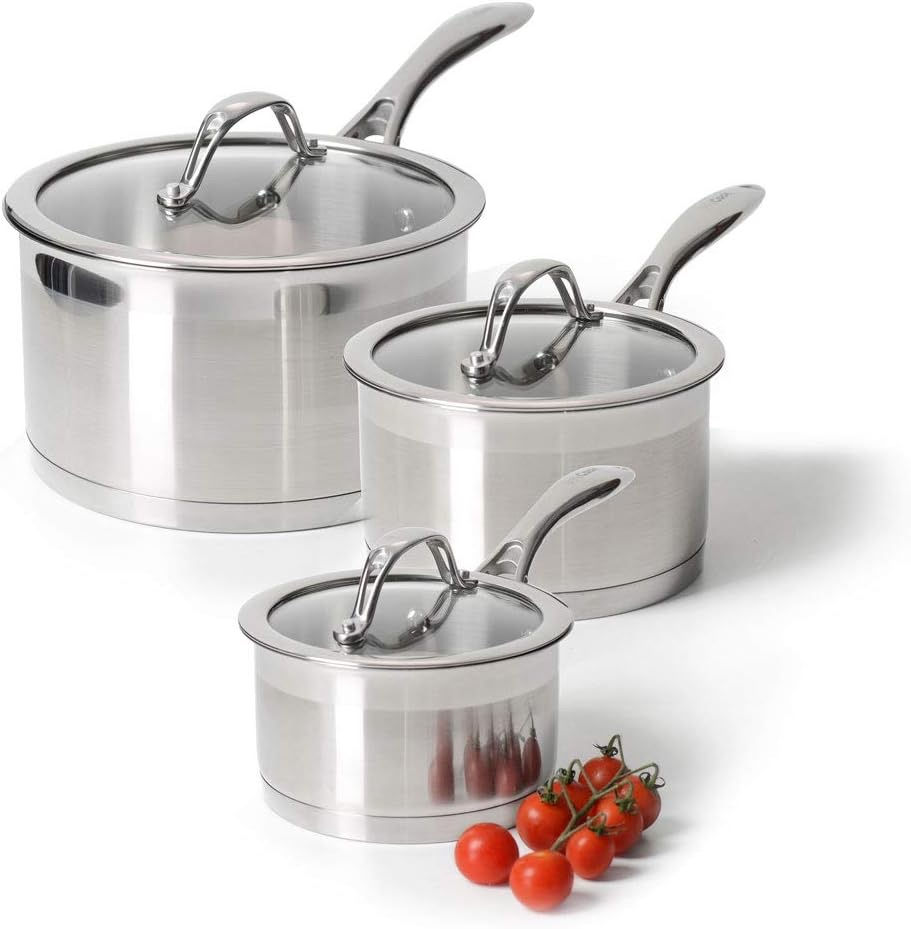


Healthy cookware isn’t exactly a bargain — which is why nothing says peak adulthood quite like discovering your dream gift is… a pan. A beautiful, non‑toxic, heirloom‑quality pan that instantly makes you feel like you’ve got your life together. And jokes aside, it is wise to invest in the thing that touches your food every single day. So here’s a curated wish list you can borrow. Drop your loved ones a strategic hint or two, and when subtlety fails, you’re left with the most reliable strategy of all: treat yourself.


